

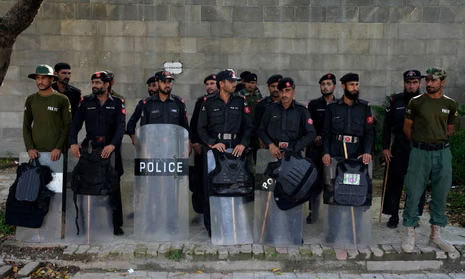
A growing political crisis has captured global attention as fresh developments emerged overnight, intensifying uncertainty and raising serious questions about stability, governance, and future policy direction. The situation continues to evolve rapidly, with new statements, shifting alliances, and increasing public concern adding pressure on decision-makers. As the political crisis deepens, analysts warn that the coming days may prove critical in determining the direction of national affairs and institutional confidence.
Rising Political Tensions Across Leadership Circles
Leadership Conflicts Intensify Decision-Making Pressure
Internal disagreements within top leadership structures have become more visible, contributing significantly to the ongoing political crisis. Conflicting viewpoints on policy direction, governance priorities, and crisis management have slowed down decision-making processes. This lack of unity has created uncertainty, weakening the ability to respond effectively to emerging challenges and increasing pressure on key political figures.
Shifting Alliances Create Instability in Power Balance
Recent political developments show shifting alliances among influential groups, which is further deepening instability. As different factions reposition themselves, the balance of power continues to change unpredictably. These realignments are not only affecting policy decisions but also shaping public perception of leadership credibility and long-term governance stability.
Public Confidence Declines Amid Leadership Uncertainty
The political crisis has also triggered a noticeable decline in public confidence. Citizens are increasingly concerned about the direction of governance, economic stability, and institutional reliability. This growing skepticism is reflected in public discourse, media coverage, and heightened political debate, all of which contribute to a more fragile national environment.
Overnight Developments Escalate the Political Situation
Sudden Policy Shifts Raise Nationwide Concerns
Overnight developments involving unexpected policy shifts have added fuel to the political crisis. These rapid changes have created confusion among stakeholders and raised concerns about consistency in governance. The lack of clear communication has further intensified uncertainty, making it difficult for institutions and the public to adapt effectively.
Emergency Meetings Signal Growing Institutional Pressure
In response to escalating tensions, emergency meetings have been held across key political and administrative bodies. These meetings highlight the seriousness of the situation and the urgency to find immediate solutions. However, limited progress and unresolved disagreements indicate that the crisis remains far from settled.
Media Coverage Amplifies Political Uncertainty
Extensive media coverage of overnight events has played a major role in amplifying the perception of instability. Continuous reporting, analysis, and speculation have kept the political crisis in the spotlight, increasing public attention and pressure on authorities. While transparency is essential, the rapid flow of information has also contributed to heightened anxiety.
Economic and Social Impact of the Ongoing Crisis
Market Reactions Reflect Investor Concerns
The deepening political crisis has started to influence economic sentiment, with markets reacting cautiously to uncertainty. Investors are closely monitoring developments, as instability often leads to reduced confidence and slower economic activity. This cautious approach reflects concerns about policy continuity and long-term financial stability.
Public Sentiment Shows Growing Frustration
As the situation continues, public frustration is becoming more evident. Citizens are expressing concerns over governance delays, policy inconsistency, and lack of clear direction. This growing dissatisfaction adds another layer of complexity to the crisis, as public trust plays a crucial role in political stability.
Institutional Operations Face Operational Challenges
Government institutions and administrative bodies are facing operational challenges due to the ongoing uncertainty. Decision-making delays, coordination issues, and shifting priorities are affecting efficiency. These disruptions highlight how deeply the political crisis is impacting day-to-day governance functions.
Possible Paths Forward Amid Ongoing Uncertainty
Dialogue and Negotiation Remain Key Solutions
Despite rising tensions, dialogue and negotiation remain the most viable path toward resolving the political crisis. Constructive engagement between opposing groups could help reduce friction and create a foundation for stability. However, achieving consensus will require significant compromise and political will.
Institutional Reforms May Strengthen Stability
Experts suggest that institutional reforms could help address underlying issues contributing to instability. Strengthening governance structures, improving accountability, and enhancing transparency may reduce future risks and restore public trust in the system.
Public Communication Strategy Needs Improvement
A more effective communication strategy is essential to manage misinformation and reduce uncertainty. Clear, consistent updates from authorities can help stabilize public sentiment and prevent unnecessary speculation. Improved communication can also strengthen trust between institutions and citizens.
FAQs
What is causing the current political crisis?
The crisis is driven by leadership conflicts, policy uncertainty, and shifting political alliances.
Why did the situation worsen overnight?
Unexpected developments and sudden policy changes increased instability and confusion.
How is the public reacting to the crisis?
Public confidence is declining, with growing concerns about governance and stability.
Is the economy affected by the political crisis?
Yes, investor caution and market uncertainty reflect the impact of political instability.
What could resolve the situation?
Dialogue, institutional reforms, and better communication could help stabilize the crisis.
Conclusion
The ongoing political crisis continues to deepen as new developments emerge, creating uncertainty across leadership, institutions, and the public. While tensions remain high, the path forward depends on dialogue, stability-focused reforms, and transparent communication. The coming period will be crucial in determining whether the situation stabilizes or further escalates, making careful decision-making more important than ever.
